
5 min read · August 14, 2026
Self-Compassion Isn't Self-Pity (and It Isn't Letting Yourself Off)
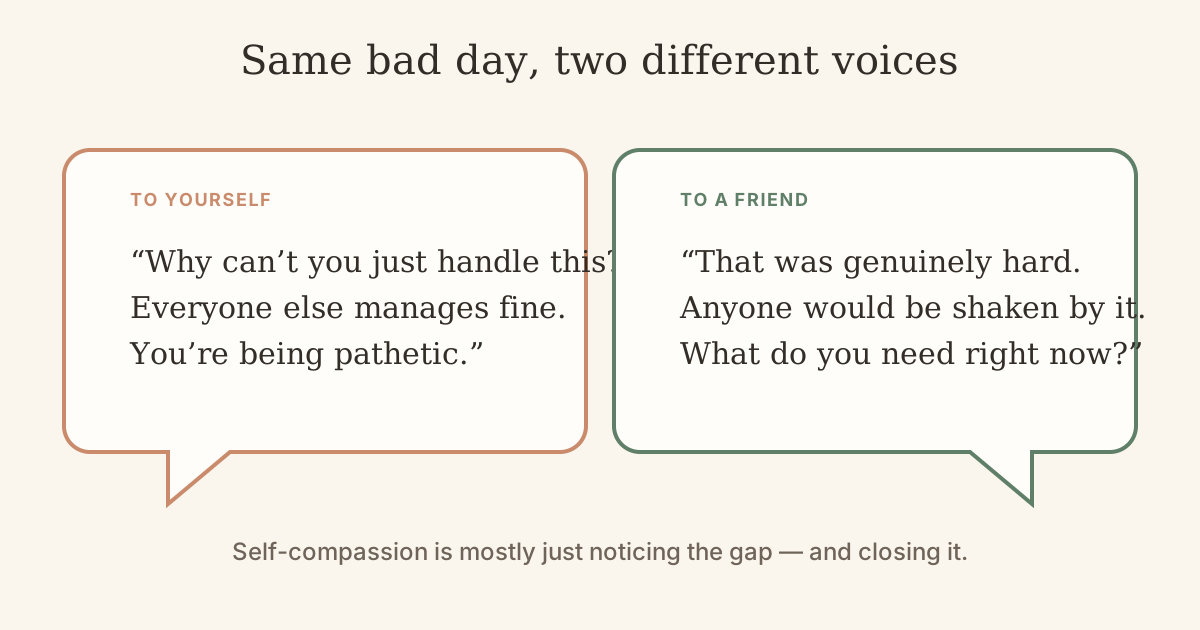
Most people are, in private, spectacularly rude to themselves. Not occasionally — as a running commentary. You can watch it happen: something goes badly, and within about a second there's a voice supplying a verdict, usually in the second person, usually harsher than anything you'd tolerate being said to someone you love.
When someone suggests being kinder to yourself about it, the objection arrives just as fast. Won't that make me complacent? Isn't that just feeling sorry for myself? The harshness feels like the thing keeping the standards up.
It's worth taking that objection seriously rather than waving it away, because it's built on a real confusion between three quite different things.
The difference, in one question
Self-pity is absorbing. It shrinks the world down to your own case, and the story it tells is that this is uniquely unfair and specifically happening to you. It doesn't ask anything of you, and it doesn't end anywhere — the whole point is the dwelling.
Letting yourself off the hook is avoidance in a friendly costume. It skips the part where you look at what happened. Nothing gets learned, so the same thing happens again in three weeks.
Self-compassion does something different from either: it lets you look straight at the thing you did badly without needing to destroy yourself in the process. It's the only one of the three that keeps both the honesty and the person intact.
The practical test is a single question, and it takes about four seconds. If a good friend told you exactly what you just told yourself — same mistake, same circumstances, same amount of sleep — what would you actually say to them?
You'd almost certainly still be honest. If they'd genuinely handled something badly, you wouldn't pretend otherwise. But you'd say it in a way they could hear. You'd factor in that they'd been running on four hours and had three other emergencies that week. You'd probably ask what they needed. Then you'd help them work out what to do next. That whole response — honest, warm, and pointed at what happens now — is what self-compassion means. It's not a softer standard. It's the same standard, delivered in a voice you can actually take instruction from.
Why the harsh voice doesn't work as well as it seems to
The reason people keep the inner critic around is that it feels productive. It sounds like rigour. And it does produce a jolt of activation — which is easy to mistake for the thing that keeps you functioning.
But watch where it actually leads over a week rather than a minute. Harsh self-talk tends to make the memory of the failure so unpleasant that you avoid the whole area: you don't reopen the file, don't check the message, don't look at the number. Avoidance is what actually costs you, and shame is a reliable way of producing it. Being able to look back at something you got wrong without flinching is what makes correcting it possible at all.
The three parts
The most durable description of self-compassion — from the psychologist Kristin Neff, who has done most of the research on it — breaks it into three pieces that have to work together.
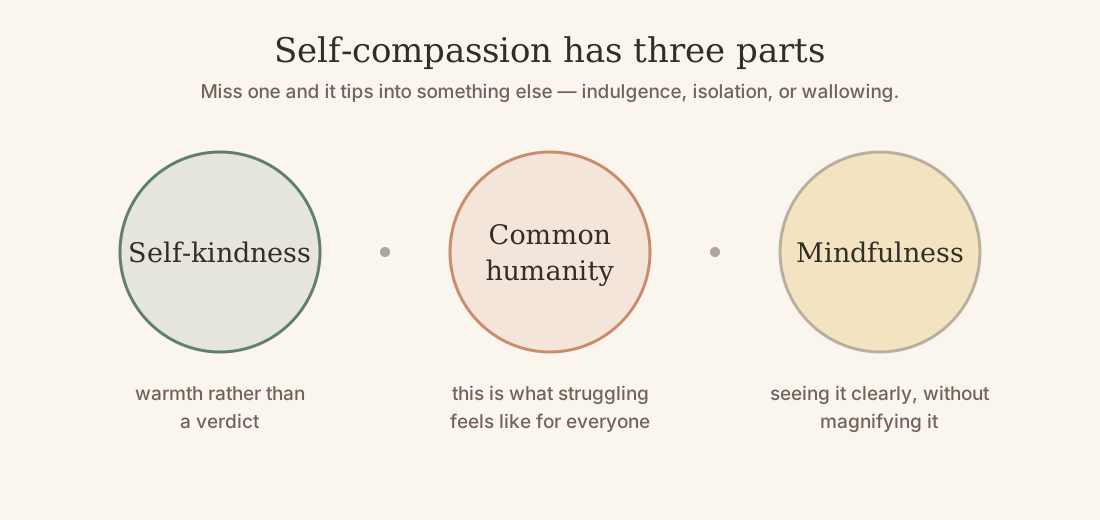
Self-kindness is the tone — warmth rather than a verdict. Common humanity is remembering that struggling is a normal feature of being a person, not evidence that you're uniquely defective; the loneliness of assuming everyone else is coping is usually doing more damage than the original problem. And mindfulness is seeing the thing at its real size — neither magnifying it into a referendum on your character nor pretending it didn't happen.
That third part is what keeps this from becoming self-pity. Self-pity fails the mindfulness test: it makes the problem bigger than it is. And it fails the common-humanity test too, because its whole premise is that this is happening to you alone.
What to actually do with this
You don't have to install a new inner voice. Start by just catching the old one — noticing, in the moment, that a sentence has arrived and that it is unusually cruel. Naming it is enough at first: "that's the harsh one again." Most people have never once observed this happening; they've only ever been inside it.
Then, when you can, run the four-second test. What would you say to a friend? Say that instead, even if you don't believe it yet. Believing it is not the entry requirement — plenty of people find the warmer sentence feels false for weeks and useful anyway.
And when something has genuinely gone wrong, try putting the two halves in order rather than choosing between them: first the acknowledgement — this was hard, I'm rattled, anyone would be — and only then the question of what to do about it. Most people skip the first half entirely and wonder why the second half doesn't take.
Reauris writes about mental wellness for a general audience. Nothing here is medical advice, a diagnosis, or a substitute for care from a qualified professional. If something in your life feels bigger than an article can hold, talking to a doctor, a therapist, or a helpline is a genuinely good next step.